

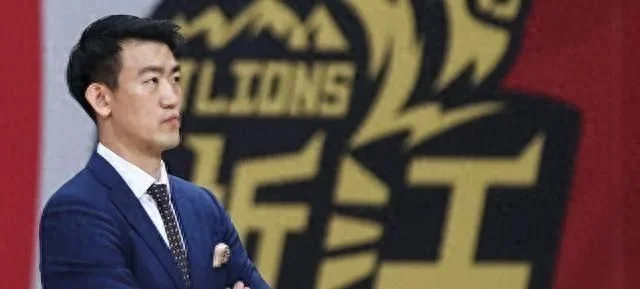
No one saw this season’s CBA plot twist coming—it shattered the expectations of even the most seasoned fans. Defending champion Liaoning didn’t even reach the second round of the playoffs. A banner hung in the stands of their Shenyang home arena struck an emotional chord with longtime supporters. Traditional powerhouses that once dominated the league are falling behind, while new forces have stormed into the final four. This year’s CBA is nothing like what fans have watched before.
Han Dejun bid farewell to the court, with teammates holding a small ceremony around his folding chair—a touching scene. Li Xiaoxu, unable to keep up for full games, jokingly called himself a “2K limited-time card,” usable for only 30 minutes before needing a sub. Zhao Jiwei deleted his Weibo verification and changed his avatar to black after the season. Rumors circulated widely that several southern teams offered him a D-level max contract, with Shenzhen even promising school district housing—a clear sign of wavering loyalty in the squad.
Liaoning wasn’t the only veteran team to stumble. Xinjiang, another traditional powerhouse, spent heavily but saw no results. Zhao Rui returned from a serious injury but was inconsistent, and imports琼斯 (Jones) and特莱斯 (Trales) underperformed against strong opponents. After moving their home games to the Olympic Sports Center, fans had to pay more for taxis, and attendance dropped by nearly 30%. Beijing Shougang also struggled: Zhou Qi’s stats looked decent after his return, but the team was plagued by injuries, with key players falling one after another. Coach Jie Libin was like a whack-a-mole player, never fielding a full-strength lineup. Fans joked that the toughest part of Shougang was the acupuncture bed in the medical room.
In less than a season, Shanghai has rewritten the CBA script. With a 38-4 record and a winning percentage above 90%, they shattered the old pattern of “Liaoning, Guangdong, Xinjiang taking turns at the top.” Getting tickets to their home games is now as hard as snagging Spring Festival train tickets—even older fans are going wild just to watch one game.
Shanghai’s success isn’t only due to the two foreign players,布莱德索 (Bledsoe) and威尔哲 (Wilcher), who average 52 points combined per game. The real shocker is the explosive performance of local players born in the 2000s. Li Tianrong and Li Hongquan are so fast they run opponents ragged, turning fast breaks into a 100-meter relay that leaves veterans struggling to keep up. Guangsha remains steady in second place, with Sun Minghui’s playoff three-point percentage skyrocketing—he’s as reliable as a loaded magazine in clutch moments. Zhao Yanhao and Wu Xiao, as the “double small” combo, contribute 20 points per game, giving the starters much-needed rest. The general manager’s vow to smash the mahjong table if they lose shows real determination.
The biggest dark horse this year is undoubtedly Shenzhen. Last summer, when Shen Zijie transferred to Beikong, fans expected a tanking season. Instead, veterans Sa Linjie, Zhou Peng, and Gu Quan led a group of newcomers to defy expectations, climbing to second in defensive efficiency. They boldly used a five-small lineup, benching players over 2.1 meters tall, and relied on speed and hustle to outwork traditional big men. Youngster Wang Haoran is a force, averaging 1.3 putback dunks per game. The arena DJ chants, “Haoran’s righteous spirit, takedown all challengers”—no one calls Shenzhen soft anymore.
In Game 2 of the quarterfinals, Shenzhen beat Zhejiang 95-91, sweeping 2-0 to reach the semifinals. Shenzhen finished third in the regular season and had a first-round bye, giving them an extra week’s rest and energy reserves. Core player He Xining was off, scoring just 6 points, but the bench stepped up, building a lead by halftime. The game stayed tight until the final second, and that resilience won fans over.
Zhejiang, on the other hand, struggled: they hit just 3 of 16 three-pointers, their perimeter completely frozen. Only three players scored in double figures. Turnovers plagued them late, and the bench couldn’t keep up with Shenzhen’s overall attack. Shenzhen’s strength is that when the star falters, the whole team rises—anyone can be the hero, with no obvious weaknesses. Wang Haoran scored 13 points in the first half, and Lu Pengyu made multiple steals leading to fast breaks. Even with poor outside shooting, their teamwork crushed the opponent.
The old guard that once monopolized the final four has been torn apart. Zhejiang’s exit is a warning to all star-dependent teams: over-reliance on one player and lack of depth will fail when it matters. Shenzhen is no longer the overlooked team from last year. They posted 30 regular-season wins (over 70% winning percentage) and a 15-game winning streak. He Xining scored 43 points in a single game and has multiple game-winners, developing into a superstar. Now, facing Shanghai, they show no fear.
Shanghai and Shenzhen have secured their semifinal spots, leaving two slots still contested. No one dares to assume a veteran powerhouse will claim them. The dark horse storm hasn’t stopped—fans are wondering which strong team will be the next to fall and who will write the next CBA legend. Guangsha is also hungry: Sun Minghui’s playoff shooting is red-hot, his three-point percentage soaring, keeping the race wide open. Their bench combo of two small guards rotates to keep scoring, and the bench is full of aggressive players—their championship ambition is clear.
The small details off the court reflect this season’s transformation. The Urumqi Olympic Sports Center’s distance from the city center has driven away fans; Shanghai tickets are nearly impossible to get, and season tickets are now a plus in the dating market. The league’s heat has permeated everyday life—who would have thought one season could bring such change?
This CBA season is far from the old, predictable path. Every team faces troubles: injuries, roster upheavals, and any small mistake can trigger a big upset. The semifinals matchups are Shanghai vs. Shenzhen and Guangsha vs. Beijing—all fresh blood going head-to-head, the old script torn to shreds. Liaoning fans now need to learn how to buy away-game tickets, while Shanghai fans can flash their season tickets on dates for instant bonus points. CBA has truly entered a new era
