

Guangdong Hongyuan fell to a 73-88 defeat against the Beijing Ducks on May 12, bringing an abrupt end to their season. In the player ratings, Hu Mingxuan and Quinn earned top marks, McCall delivered a serviceable performance, while Xu Jie, Du Runwang, Zhang Haojia, and Sullinger all failed to meet expectations.
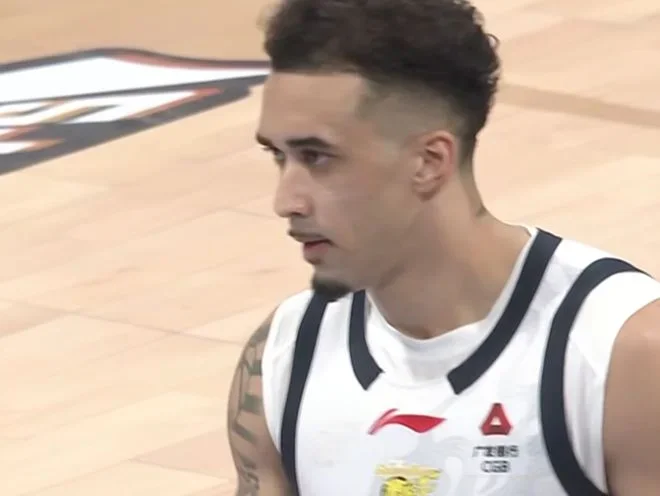
Hu Mingxuan and Quinn were the only two Guangdong players who could hold their heads high after the loss. Hu played 32 minutes, shooting 3-for-9 from the field and 3-for-8 from three-point range, finishing with 13 points, 2 assists, and 1 rebound. Quinn logged 28 minutes, hitting 9 of 19 field goals and 1 of 9 from deep, for a team-high 25 points, 8 rebounds, and 3 assists. While their shooting percentages were far from elite, especially from beyond the arc compared to the previous game, Guangdong would have collapsed in the first half without their offensive contributions.
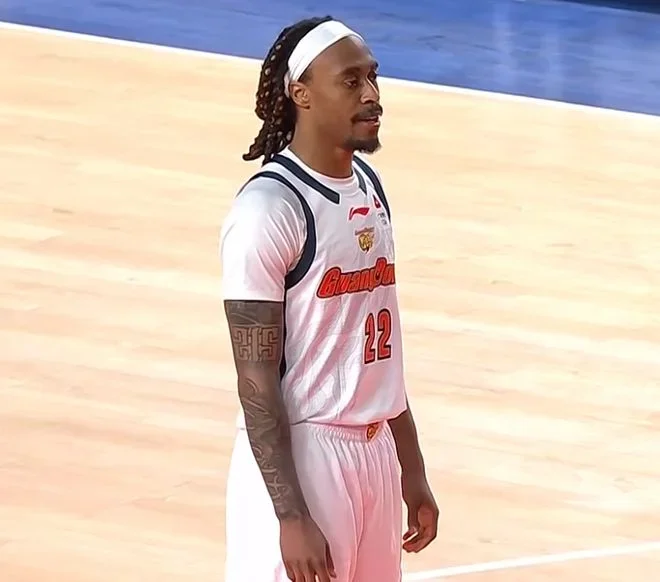
McCall had 11 points, 2 rebounds, and 2 assists on 5-for-13 shooting. His performance was somewhat mediocre – he was ball-dominant on offense with low efficiency and questionable shot selection, and despite his relentless defensive effort, the results were mixed. However, McCall still fared better than Larko and Sullinger. Coach Du Feng was forced to use him in the fourth quarter not by choice, but because the other two imports were unreliable when Quinn needed rest; McCall at least provided some defensive stability and grinded out points through hustle.
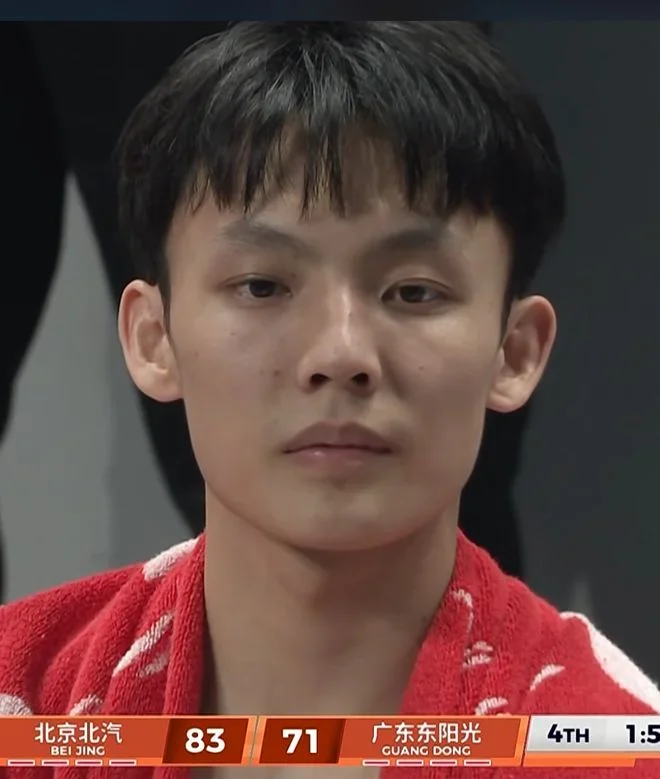
As for Xu Jie, Du Runwang, Zhang Haojia, and Sullinger – all four fell short.
Xu Jie was virtually invisible throughout the game. In 17 minutes, he attempted 3 shots without making any, including 0-for-1 from three, scoring zero points while grabbing 4 rebounds and dishing 2 assists, plus one turnover. Xu has consistently struggled to prove himself in high-stakes, must-win games. The core issue lies in his physical limitations: his height, athleticism, and speed are not enough to maintain consistent performance under intense pressure. In this series, whenever Beijing deployed a guard or wing with sufficient size to stick with Xu and contest his threes, he became a non-factor once his outside shot wasn’t falling. His poor outing was also partly due to Coach Du Feng’s decision to bench him for long stretches – a ball-dominant guard often finds it difficult to regain rhythm after being sidelined.
Du Runwang and Zhang Haojia continue to show their old problems. They can hit a three-pointer occasionally, but most of the time they are unreliable. Defensively, they either commit needless fouls or over-help and get blown by, giving up five points for every three they score. When your starting forwards are Zhang Haojia and Du Runwang, it’s hard to call yourself a championship contender.
And then there’s Sullinger – no need to say much more. The highest-paid player on the team delivered the worst performance. In 15 minutes, he shot 1-for-6 from the field and 1-for-3 from three. Is this the stat line expected from a player earning close to 10 million RMB annually? Larko, a temporary signing making less than 1 million, easily went 3-for-8 for 6 points and 3 rebounds. What makes Sullinger better than him? It’s clear that this could be Sullinger’s last season in the CBA. Guangdong is in a tough spot – last season Burke retired after the playoffs, and now Sullinger seems likely to follow suit. The blame for repeatedly signing old, slow, aging imports falls squarely on Zhu Fangyu and Du Feng.
