

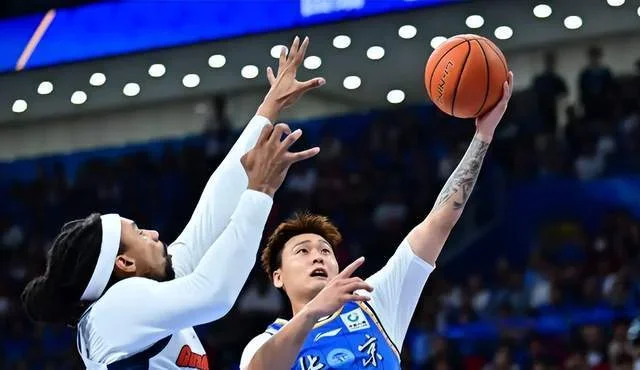
On May 13, Beijing time, after Guangdong fell 73-88 on the road and was eliminated in the quarterfinals, the victory for Beijing Shougang did not spark the expected celebration. Instead, it triggered a silent game of “who is more terrifying” behind the scenes. Surprisingly, the most unsettled team is not the defeated Guangdong, but Shanghai, who is about to face Beijing.
Shanghai had anticipated facing a exhausted and system-broken Guangdong in the semifinals. They were familiar with Guangdong’s tempo, understood Xu Jie’s limitations, and knew the fragility of Laku and Salinger under pressure. In three meetings this season, Shanghai not only won all games but also crushed their opponent by 40 points in one match. That was no accident — it was a clear display of strength. They were looking forward to revenge, maintaining psychological advantage, and paving their playoff path with an easy win. But reality pushed them toward a different path: facing Beijing means dealing with a mature system featuring Zhou Qi in the paint, Zeng Fanbo on the wing, and Zhao Rui and Chen Yingjun in the backcourt — a team that can still turn games around with willpower in do-or-die battles.
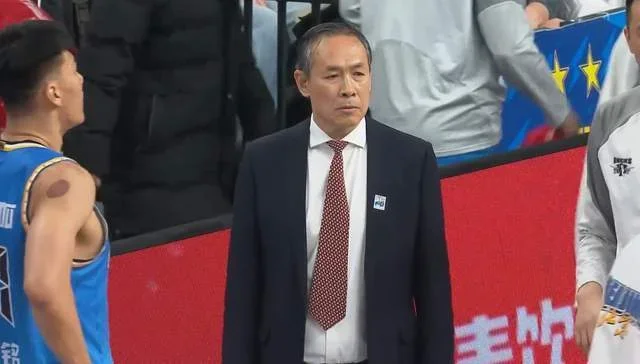
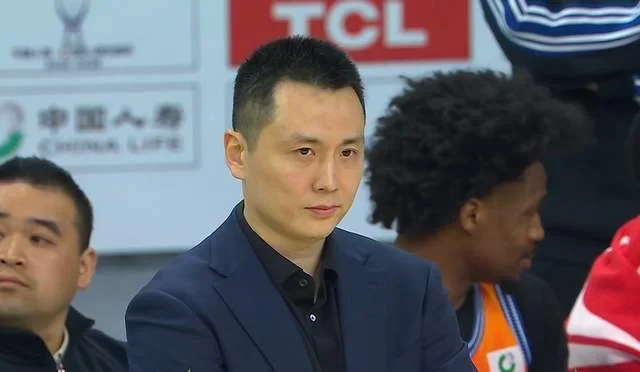
Beijing’s victory, however, exposed their most dangerous weakness — the struggles of their foreign players. McGee played 14 minutes without a single field goal made (0-for-6), Spellman logged 8 minutes and 48 seconds with 0-for-3 shooting. Together, they contributed just 5 points and 8 rebounds, dragging down Beijing’s offensive rhythm. Coach Xu Limin decisively substituted Spellman in the second quarter and never used him again. This move was not just a tactical adjustment but a zero-tolerance stance toward professionalism. Spellman had angrily pointed at the coach, while McGee frequently posted on social media during the playoffs. Fans’ doubts were no longer rumors but a serious question about the team’s championship determination. These players are on top-tier CBA contracts but delivered the poorest performance at the most critical moment.
Yet, Beijing still won. Because of Zhou Qi’s presence, every flaw had a cushion. In 25 minutes, he posted 18 points, 8 rebounds, and 4 blocks — not just stats, but a spiritual pillar. When he refused to come off the court, saying “the situation is good, I can push through,” Coach Xu respected his decision. This was not a gamble but the ultimate expression of trust. A team that can tolerate foreign player failures and still win a must-win game through its core’s dominance — such resilience is far harder to handle than a team relying solely on imports.
Shanghai’s anxiety lies precisely here. They are not afraid of Guangdong’s weaknesses because they can strike precisely. But they fear Beijing’s “imperfect strength” — a flawed but soulful team, a system that can overcome technical gaps through willpower. When McGee and Spellman are virtually invisible on the court and Beijing still wins, it shows their victory does not depend on individual heroics but on overall discipline and core leadership. Such a team is far more unpredictable and harder to break down than any star-studded roster.
However, not all media analysts are optimistic about Beijing. For instance, Shandong-Qingdao journalist Du Jincheng publicly commented on McGee and Spellman. He bluntly stated: “With these two veterans’ attitudes on and off the court, Beijing will find it very difficult to get past Shanghai.”
So, the question remains: Can Beijing really beat Shanghai? Let’s wait and see!
